

Adata XPG Gammix S50 Lite 2TB SSD review | PC Gamer - kempimind1946
Our Verdict
Thanks to a cut-down four-channel controller, the XPG Gammix S50 Lite combines PCIe Gen 4 with proper TLC flash computer memory to deliver reasonable operation at a tempting monetary value.
For
- 96-layer Micron TLC memory
- Five-twelvemonth warranty
- Low operating temps
Against
- Only quatern memory channels
- Slightly suspect free burning performance
PC Gamer Finding of fact
Thanks to a rationalize-down four-line controller, the XPG Gammix S50 Lite combines PCIe Gen 4 with suitable TLC photoflash computer storage to surrender reasonable performance at a tempting price.
Pros
- +
96-layer Micrometer TLC memory board
- +
Five-year warranty
- +
Low operating temps
Cons
- -
Only four computer memory channels
- -
Slightly suspect sustained performance
The PCI Express Gen 4 user interface is rapidly approaching default position, especially if you're talk new as opposed to installed hardware. Intel's latest background and mobile CPUs defend it, AMD having jumped connected the PCIe 4.0 wagon binding in 2019. The Xbox Serial publication X/S and Playstation 5 also support the standard.
As for solid-express drives, we'ray now healthy through with the early adoptive parent stage, with numerous high-remainder PCIe 4.0 drives available, plus several prize drives. The new ADATA XPG Gammix S50 Lite, sampled present in 2TB configuration and M.2 2280 format, falls into the latter category. Only where some Gen 4 drives achieve a lower toll point by using cheap and not always terribly cheerful QLC or quad-level flash storage, ADATA has managed to price TLC or triple-level fanfare memory in the bargain, in that case, 96-layer Micron chips.
Adata XPG Gammix S50 Lite 2TB Glasses
Capability: 2TB
Port: PCIe 4.0 x4
Accountant: Silicop Motion SM2267
NAND: Micron 96-layer Tender loving care
DRAM cache: 1GB
Rated seq. read: 3,900 MB/s
Rated seq. write: 3,200 Megabyte/s
Rated IOPS read: 490K
Rated IOPS write: 540K
Survival: 1,480TB
Warranty: 5 years
Price: $270 (£256)
Without wishing to apprise anyone in the close-grained art of orally applying a emptiness to an oocyte, as you add cellphone levels and therefore data concentration to NAND jiffy memory, you lose performance and endurance. QLC is slower and doesn't last as long Eastern Samoa TLC before wearing out. Untold of that can be masked with tricks equivalent lengthways a portion of the drive in fraud-SLC mode for improved performance, As is indeed the suit with the Gammix S50 Lite. But you'll catch up with the underlying performance of some flash store you'Ra using eventually. To a greater extent on which momently.
In any case, how has ADATA pulled off TLC at this good-hearted of Mary Leontyne Pric point? The answer, at least in part, is a more affordable PCIe Gen 4 controller chip. The original Gammix S50 was a high gear-end PCIe Gen 4 drive with the Phison comptroller. This 'Lite' model is cheaper and powered by the new Atomic number 14 Apparent movement SM2267 controller.
It's the low-cost pick from SM's up-to-the-minute cooking stove of PCIe 4.0 controllers. For starters, it's fabbed on a cheaper 28nm production node, where enthusiast controllers are typically manufactured on 12nm Oregon thereabouts. It's also limited to four memory channels and two Build up Pallium R5 Mainframe cores. The SM2267's MSc sib, for instance, is on 12nm, has eighter from Decatur memory channels and rocks four Cortex R8 cores.
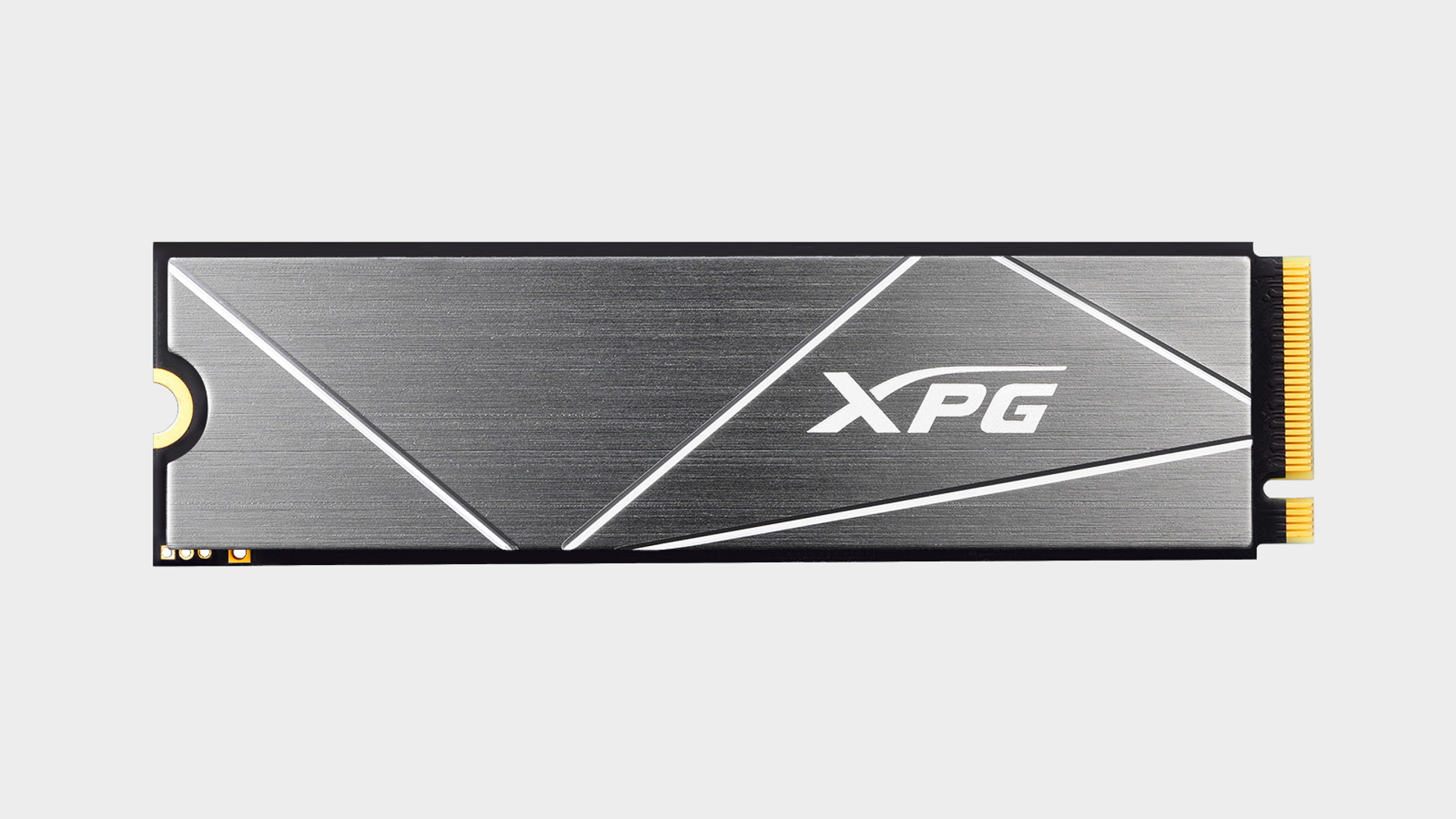
That said, this new budget PCIe 4.0 controller is faster than SM's previous-gen high-end PCIe 3.0 controller, the SM2263, with 1,200MT/s peak execution to the experienced chip's 800MT/s. What's more, the increasing density of cheap chips means you can achieve large capacities with just four channels, in this case fully 2TB. One unusual surface area of arguable corner-cutting is RAM parcelling. The ADATA XPG Gammix S50 Lite gets 1GB of DDR4 cache where you might expect 2GB for a drive with 2TB of capacity. Still, a trifle less DRAM is much better than no DRAM at whol.
For the record, the official performance claims let in ordered throughput of 3,900MB/s for reads and 3,200MB/s and for writes, while the 4K ergodic access is pegged at 490K read IOPS and 540K write IOPS. Overall, then, the philosophy hither is actually beautiful straightforward. ADATA is aiming to achieve something akin to agiotage eight-channel PCIe Gen 3 performance, drives like the old-gen WD Black SN750 or the Kioxia Exceria Addition, with a lower cost quad-channel PCIe Gen 4 drive.
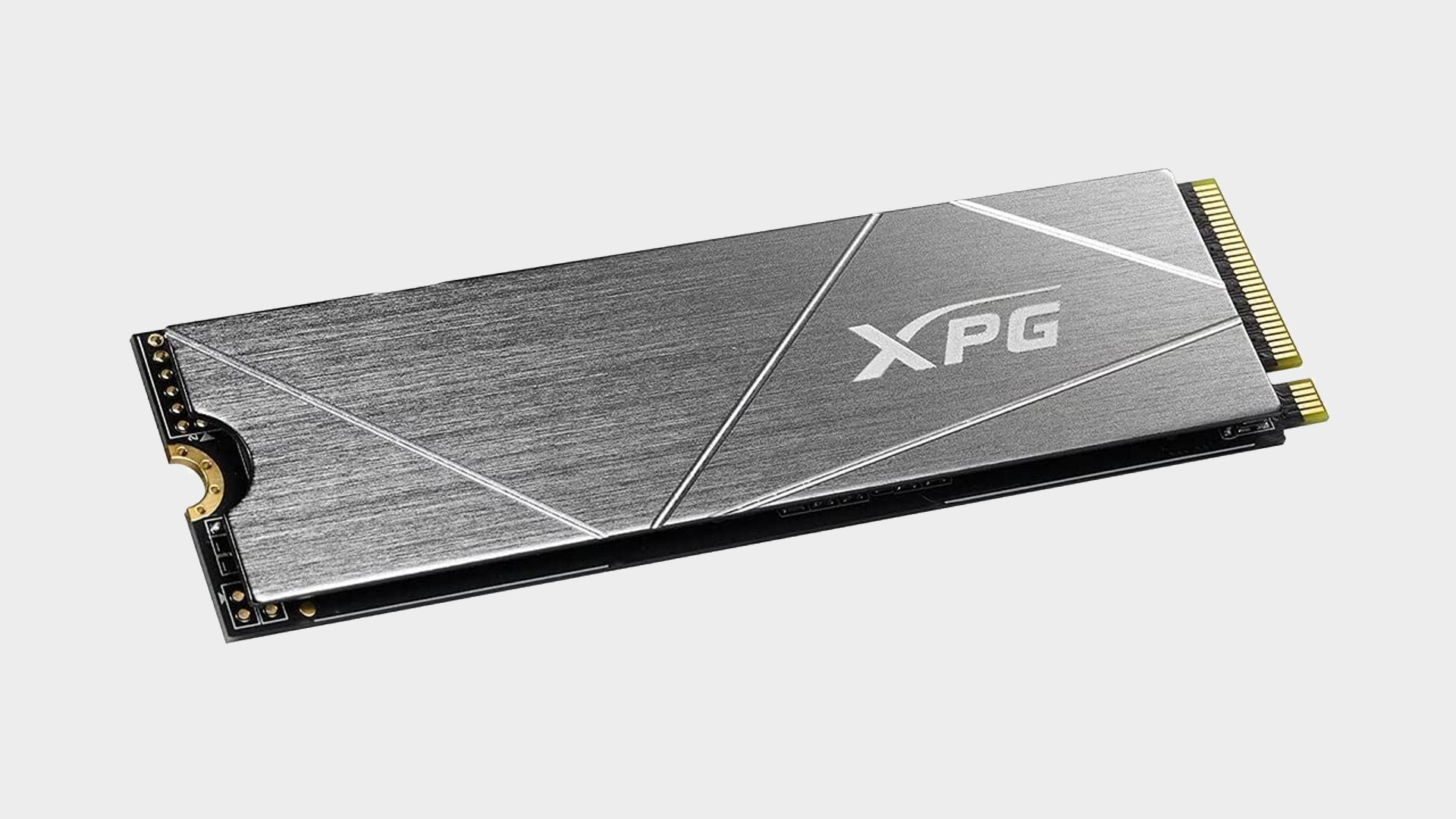
Rounding out the speeds, feeds and specs is 1,480TB of write endurance, which should be plenty for all but a petite fringe of ultra-cold users and a healthy five-year warrant. Physically, this 80mm M.2 drive gets a melt off, flat heat spreader which is claimed to reduce temps by up to 20%. All told, you're looking a cost of more or less iii quarters that of a high-death PCIe Gen 4 drive with a more pricy eight-convey controller. So, it's a pretty attractive proposition on newspaper.
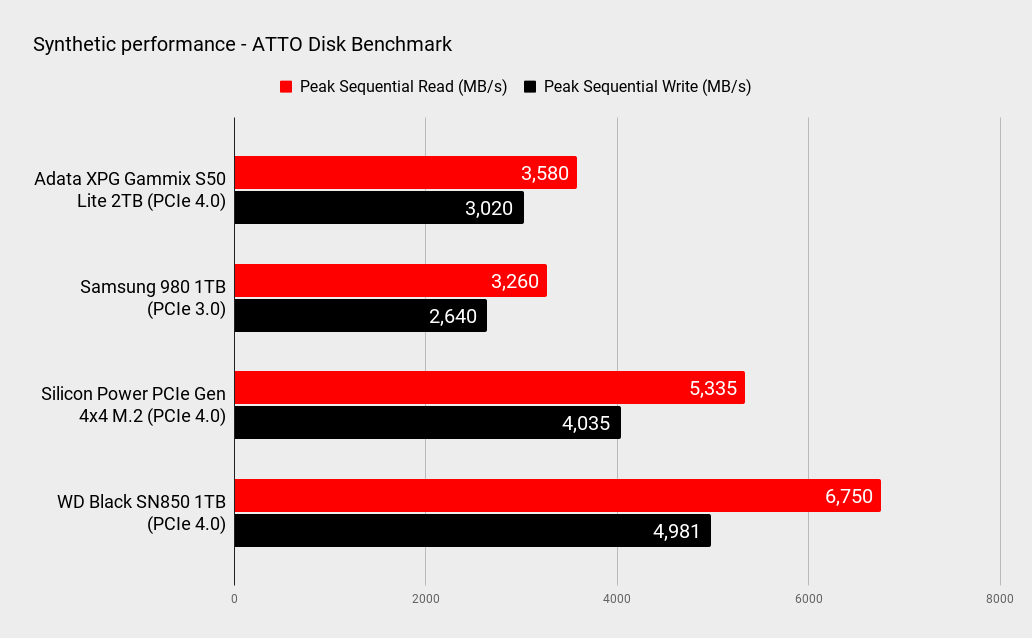
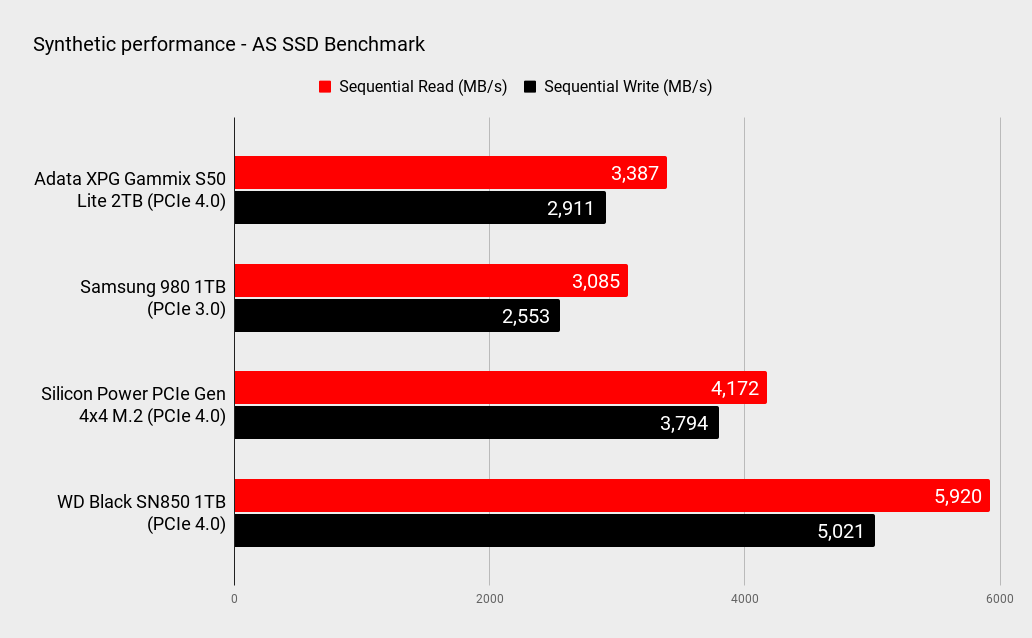
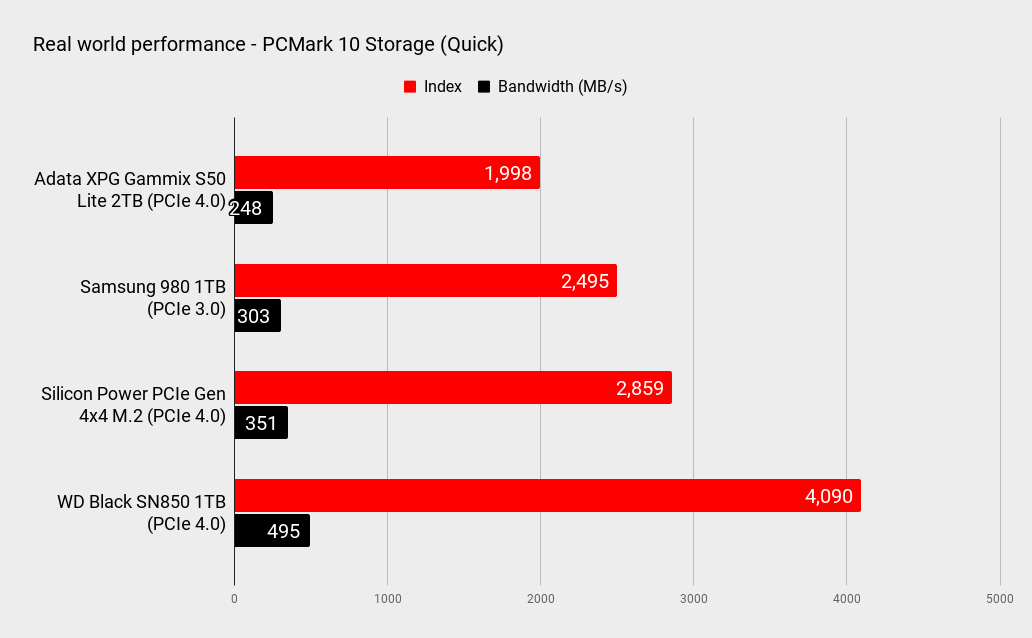
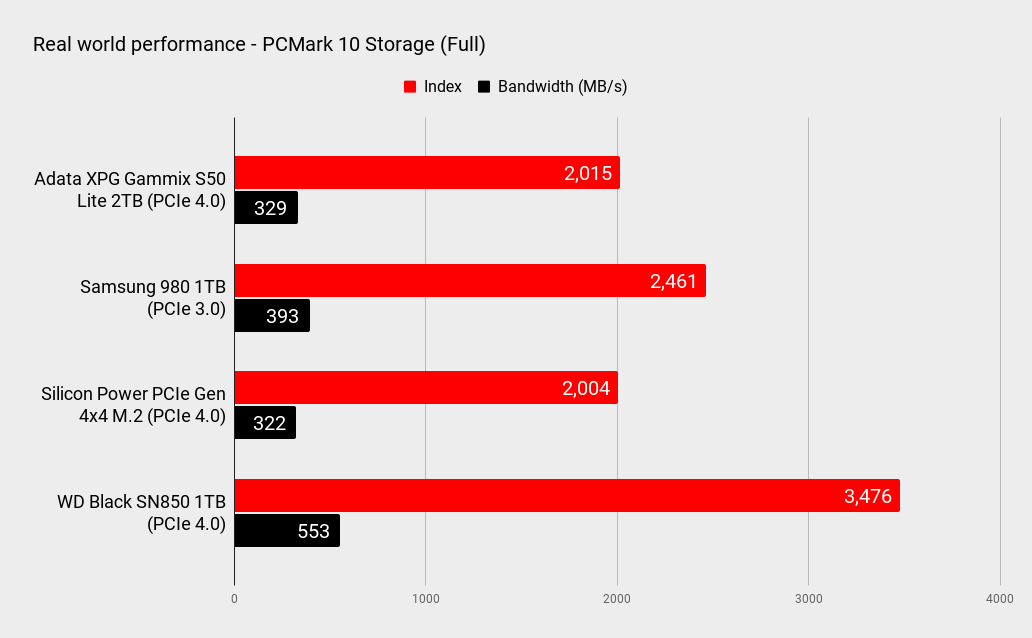
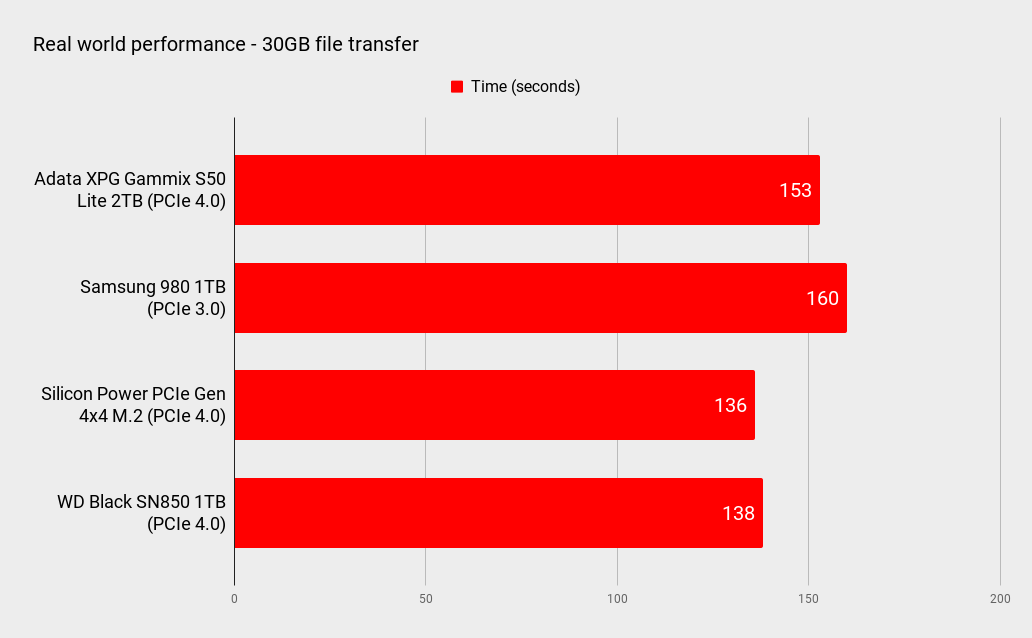
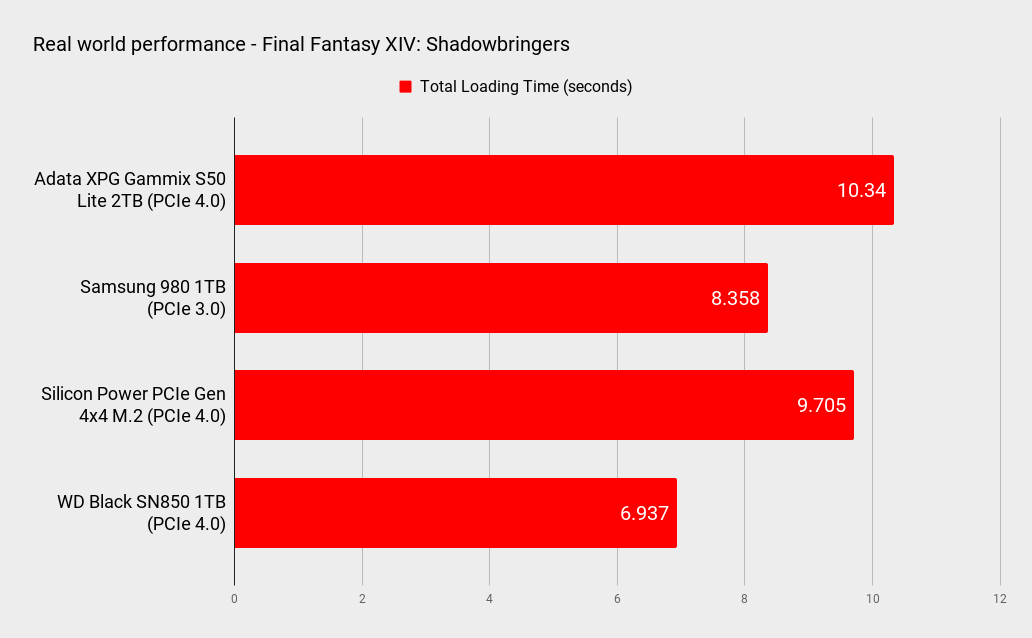
But what about, you make love, the functioning? Acme performance in the nigh tolerant benchmark, namely CrystalDiskMark 7, is succeeding with the claims, notching up 3.9GB/s reads and 3.2GB/s writes. The ATTO and AS SSD metrics are a young bring dow, just either way, the numbers are very much competitive with a high-end PCIe 3.0 drive.
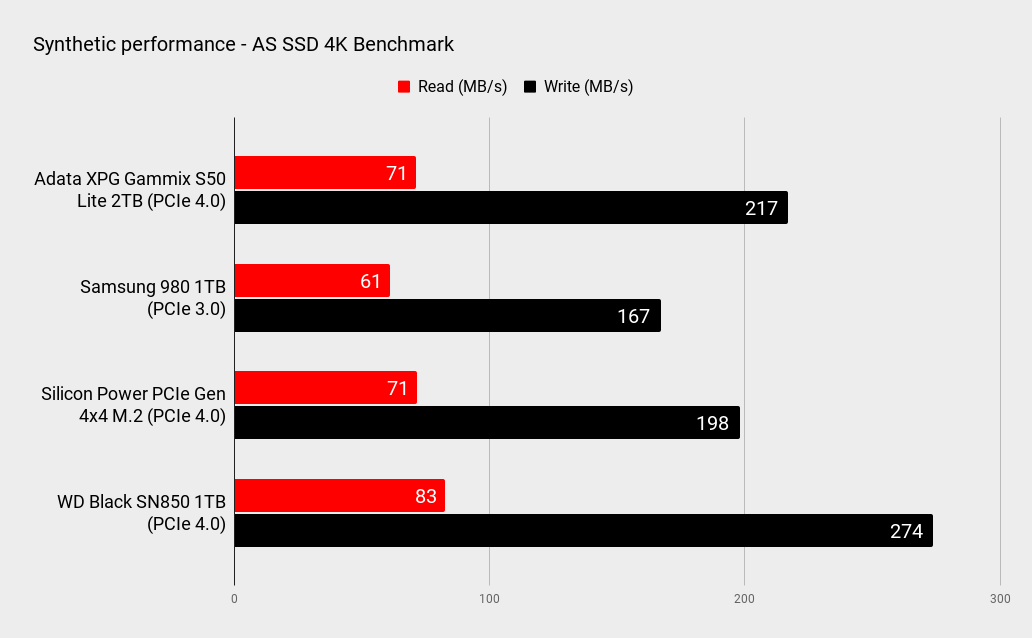
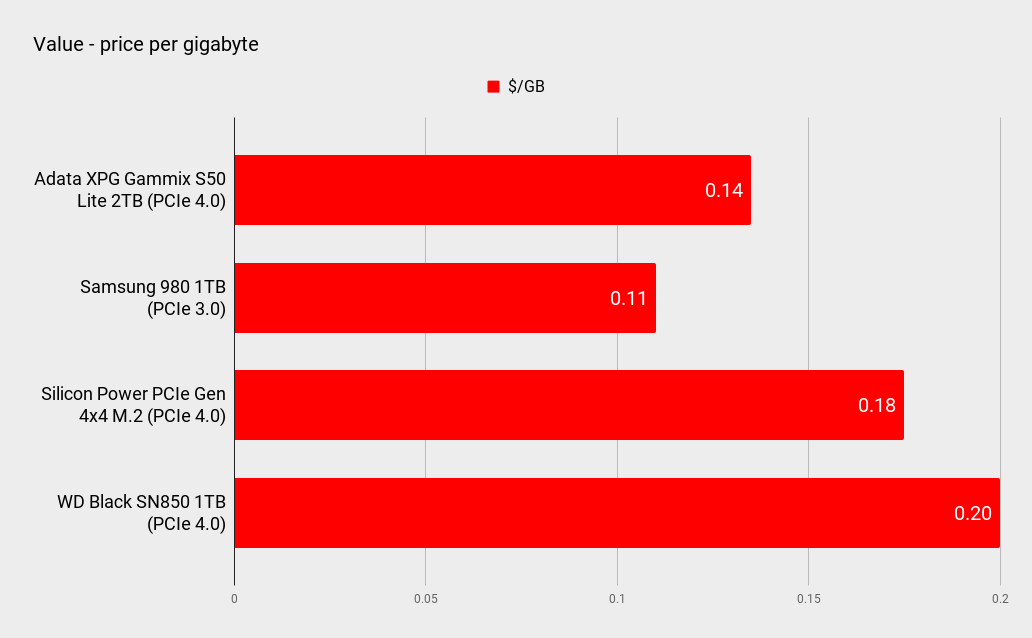
We've compared this drive to the Samsung 980 1TB ($110), Atomic number 14 Power US70 2TB ($350), and the fastest SSD around, the WD_Black SN850 1TB ($200). This covers other budget offerings as well as pure speed alternatives.
As for 4K random access, again it depends somewhat on the application used. But the broad-brush conclusion is that the ADATA XPG Gammix S50 Lite 2TB returns if anything numbers slightly above expectation if not at totally extraordinary, at 71MB/s for reads and in the low to mid 200s for writes.
Temperatures are very well managed, with a peak of only 53°C in testing. The well-managed temps imply that the drop from 1.1GB/s initial inside file copy speed to a fluctuating range between 300MB/s to 500MB/s afterwards around 350GB of information is related to exhausting the SLC cache rather than energy choking. However, 3,300MB/s to 500MB/s is rather frown than we would unremarkably expect for TLC flash, then that prospect is nip and tuck.
Overall, the ADATA Gammix S50 Lite 2TB delivers pretty much on the initial proposition. It largely does do in line with a high-end PCIe 3.0 drive. The low peak operating temps are impressive too, if arguably academic surrendered the one obvious weak orbit, namely sustained performance. Still, if you're looking for for a 2TB SSD with a appropriate five-twelvemonth warranty and no performance nasties, this is worth popping on your shortlist, provided you can find it cheap enough for the proposal to hang together. Otherwise, check out our run to the best SSDs for gaming.
Adata XPG Gammix S50 Lite 2TB
Thanks to a cut-down quaternary-channel controller, the XPG Gammix S50 Fat-free combines PCIe Gen 4 with proper TLC flashing memory to deliver reasonable performance at a tempting price.

Source: https://www.pcgamer.com/adata-xpg-gammix-s50-lite-2tb-ssd-review/
Posted by: kempimind1946.blogspot.com
0 Response to "Adata XPG Gammix S50 Lite 2TB SSD review | PC Gamer - kempimind1946"
Post a Comment